

Explore Hiroshima’s Bridges by Taxi!
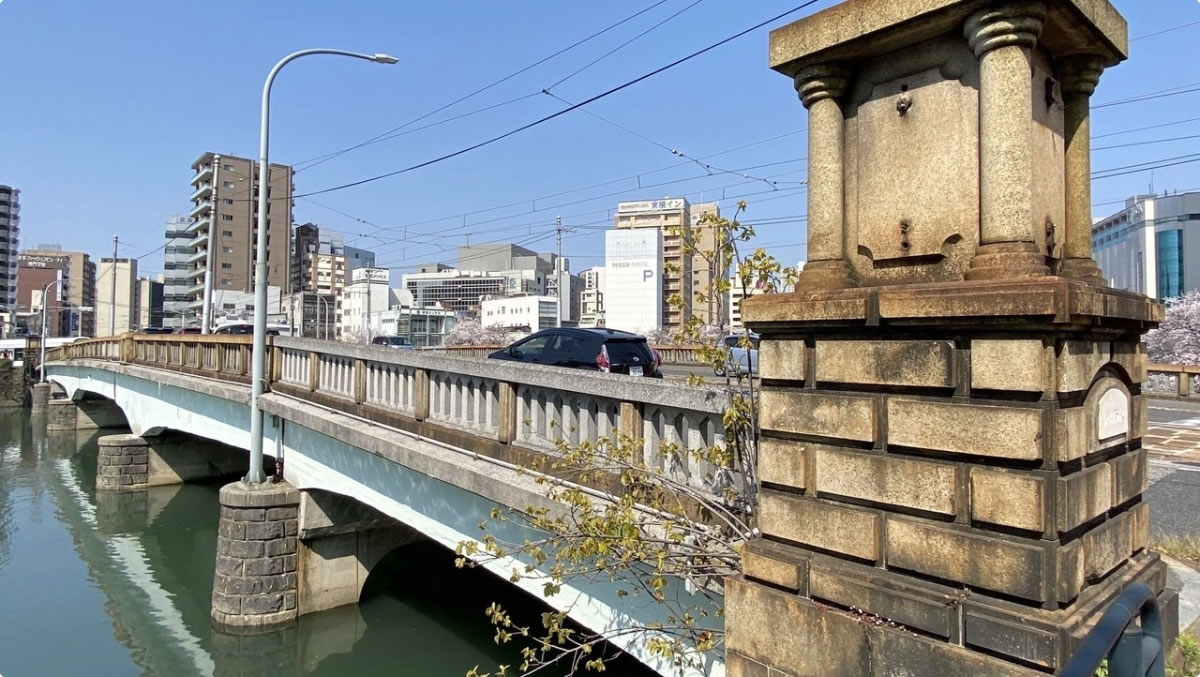
Hiroshima is located on a delta, so the city has many rivers and is often called “the city of bridges.” The atomic bomb, an inseparable part of Hiroshima’s history as a city of peace, left its mark on many of these bridges. On this tour, you can see all six Hibaku Bridges (Atomic-bomb-surviving bridges). You will also view bridges along the Saigoku Road used by daimyo processions during the Edo period.
This Hiroshima Bridges Taxi Tour lets you explore Hiroshima’s history while incorporating peace education.
<Sample Itinerary> Recommended 2-Hour Course
START: Hiroshima Station
- Kojin Bridge – Hibaku bridge
- Inari Bridge – The first postwar bridge on Kyobashi River shared with a tram line.
- Hijiyama Bridge – Hibaku bridge. Due to its historical significance, Hiroshima City prioritizes its maintenance.
- Miyuki Bridge – Named after Emperor Meiji, who crossed it three times. The original bridge pillars from the time of the bombing remain.
- Peace Bridge – Designed by Isamu Noguchi, it inspired designer Issey Miyake to pursue his career.
- West Peace Bridge – Also designed by Isamu Noguchi, complementary to Peace Bridge.
- Midori Bridge – Constructed with artificial marble and natural granite; replacement is under consideration.
- Shinkoi Bridge – A combined-use bridge over Ota River on Peace Boulevard, used by trams.
- Kanko Bridge – Hibaku bridge / Saigoku Road. Very short; some drivers don’t even notice it’s a bridge.
- Koi Bridge – Saigoku Road. Originally built before 1596; historical records show Samurai lord Hideyoshi ordered repairs on his way to Nagoya Castle.
- Tenma Bridge – Saigoku Road. The only bridge over the former Koya River (now Tenma River) in the Edo period.
- Honkawa Bridge – Saigoku Road. Originally built as a wooden bridge called “Nekoya Bridge.” A truss bridge recognized by the Japan Society of Civil Engineers.
- Motoyasu Bridge – Saigoku Road. Lantern floating ceremony held here every August 6.
- Aioi Bridge – A rare T-shaped bridge; easily visible from above, it was a target for atomic bombing.
- Sorasaya Bridge – Opened in 1970, named after Sorasaya Inari Shrine downstream on the west end.
- Kyobashi Bridge – Hibaku bridge / Saigoku Road. Oldest steel bridge in the city and closest to the hypocenter; the right bank has the nation’s largest riverside terraces.
- Kamiyanagi Bridge – Uppermost on Kyobashi River; right bank has hibaku trees.
- Sakae Bridge – Hibaku bridge. The railings were blown away in the bombing, but the bridge remained intact.
- Ekimae Bridge – Gateway to Hiroshima: Trams now connect directly to the station building’s 2nd floor.
- Enko Bridge – Hibaku bridge / Saigoku Road. The oldest bridge in Hiroshima and the most decorative among the city’s bridges.
FINISH: Hiroshima Station
<Estimate for 2 hours : Tax included >
Taxi fare 16,500 yen
English speaking driver fee 10,000 yen (up to 5 hours)
Parking fees not included.
Notes:
- This example course starts and ends at Hiroshima Station, but pickup from your hotel and drop-off at a preferred location are also possible.
- Other locations can be included according to your request.
Other options:
- Van limousine accommodating up to 9 people are available (additional fare applies).
- This is our suggested Hiroshima Bridge Tour, but customers can customize their own route—please consult us!